






Technical and Market Analysis of the DJI Osmo Pocket 4 Series: The Evolution of Professional Portable Cinematography
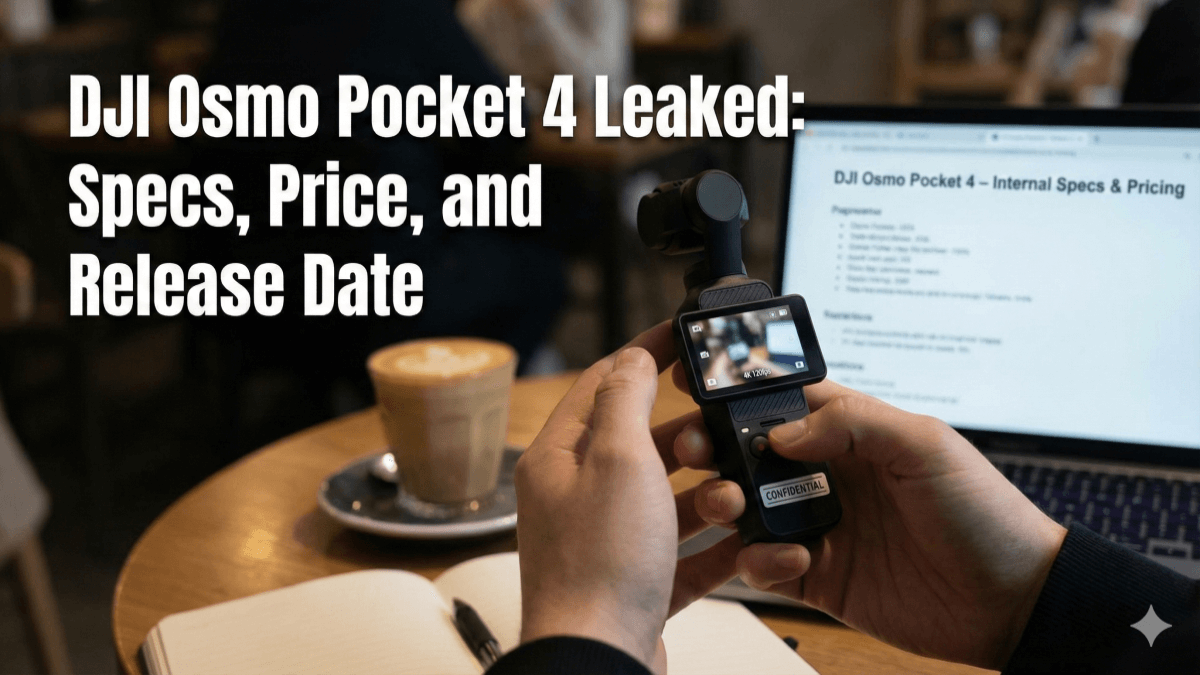
The landscape of handheld imaging has undergone a significant transformation leading into 2026, characterized by an increasingly competitive struggle between purpose-built hardware and high-end computational photography integrated into smartphones. The emergence of the DJI Osmo Pocket 4 series, comprising both a Standard and a Pro variant, represents a pivotal response by the market leader to maintain its dominance in the portable vlogging sector. This report examines the technical specifications, regulatory filings, market positioning, and real-world efficacy of the Osmo Pocket 4 series based on recent leaks and certifications.
DJI Osmo Pocket 4 Pro FCC Listing Confirms Global Launch Plans and Battery Architecture
The primary indicator of an imminent global rollout for any consumer electronic device is its appearance in regulatory filings. For the DJI Osmo Pocket 4 series, the Federal Communications Commission (FCC) documentation provides the most concrete evidence of a synchronized international release, specifically targeting the North American market. The standard model was registered under FCC ID 2ANDR-OP041, while the more advanced “Pro” version appeared as “Osmo Pocket 4P” with the model number PP-041. These filings were signed and declared by Niki Fang, Certification Supervisor at SZ DJI Osmo Technology Co., Ltd., on December 15, 2025, suggesting that the hardware was finalized and ready for compliance testing well before the anticipated 2026 launch window.
A detailed analysis of the electrical specifications within these filings reveals a sophisticated power management system designed to address the longevity concerns associated with the Osmo Pocket 3. The Osmo Pocket 4 Pro is confirmed to house a $1,545mAh lithium-polymer battery at a nominal voltage of $7.7V. This results in an energy density upgrade of approximately 18.8% over the $1,300mAh cell found in its predecessor. The implications of this larger battery are profound when coupled with rumors of a more efficient processor. Internal testing data suggests that the Standard model can achieve recording times exceeding 200 minutes at $1080p/24fps, representing a significant jump from the 166-minute limit of the previous generation.
The FCC listing also provides insight into the connectivity suite. The Pocket 4 series continues to support Wi-Fi 5 and Bluetooth Low Energy (BLE), ensuring backward compatibility with the existing DJI Mimo ecosystem and the DJI Mic 2. However, some leaks suggest that the Pro version may include Wi-Fi 6 or a proprietary $5G transmission protocol to facilitate higher bitrate live streaming and faster file transfers, which would be essential for handling the increased data volumes of $6K video.
| Power and Regulatory Specification | Osmo Pocket 3 | Osmo Pocket 4 Standard | Osmo Pocket 4 Pro |
| FCC ID | 2ANDR-OP031 | 2ANDR-OP041 | 2ANDR-PP041 |
| Battery Capacity | 1,300mAh | 1,545mAh | 1,545mAh |
| Nominal Voltage | 7.7V | 7.7V | 7.7V |
| Estimated Energy | 10.01Wh | 11.90Wh | 11.90Wh |
| Charging Time (80%) | 16 minutes | 15 minutes | 18$ minutes |
| Max Operating Time | 166 minutes | 200 minutes | 180$ minutes ($6K) |
The strategic timing of these filings is crucial. By securing FCC approval before December 23, 2025, DJI appears to have successfully navigated the regulatory cutoff that implemented stricter bans on new authorizations for certain categories of foreign-made equipment in the United States. This regulatory “maneuver” ensures that the Osmo Pocket 4 series remains available to U.S. consumers despite escalating geopolitical tensions surrounding drone and imaging technology imports.
DJI Osmo Pocket 4 Release Date and Market Arrival
The timeline for the DJI Osmo Pocket 4 release has been the subject of intense speculation, fueled by warehouse inventory leaks, retailer mishaps, and accidental social media posts. Early roadmap projections originally pointed toward a December 2025 announcement to capture the holiday shopping season. However, internal delays, reportedly due to quality control issues with the modular accessory ecosystem, including wireless microphones and gimbal mounts, pushed the announcement into the first quarter of 2026.
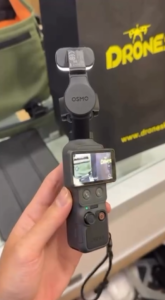
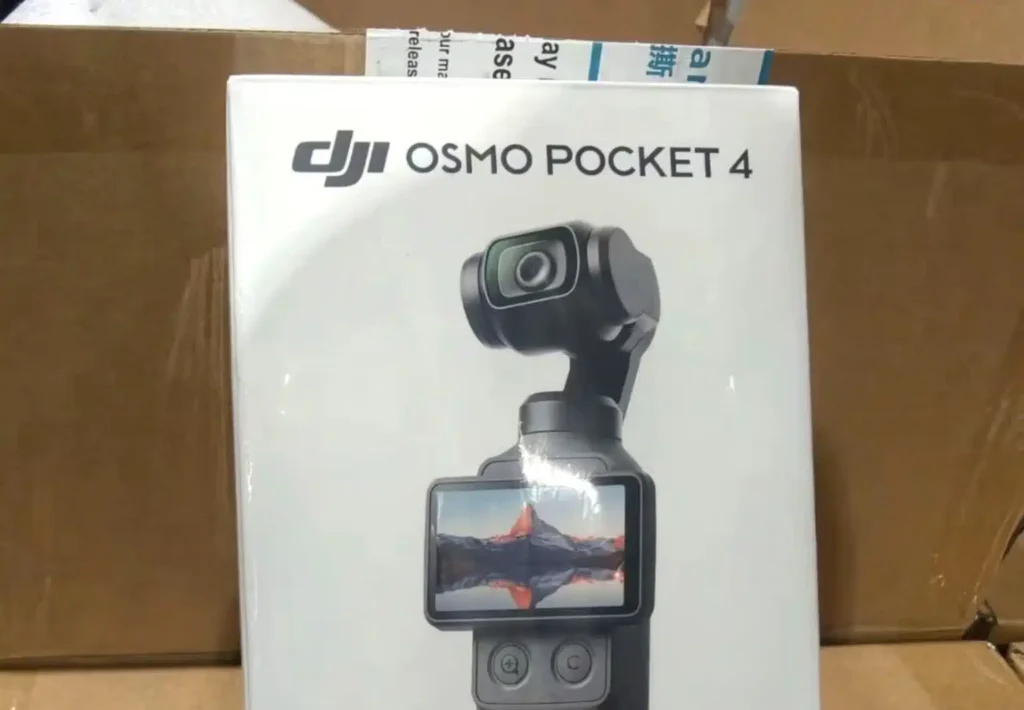
On February 15, 2026, a significant leak occurred in Kuala Lumpur, Malaysia, when a customer visited the official DJI-authorized retailer DronesKaki with a physical unit of the DJI Pocket 4. The retailer posted a 33-second Instagram Reel capturing hands-on footage of the device, which confirmed that the camera was already in the hands of early reviewers or beta testers outside of China. This sighting, combined with reports of retail boxes appearing in distribution centers, indicates that the official launch for the Standard model is scheduled for late February or early March 2026.
The “Pro” variant follows a different release trajectory. Industry analysts suggest that DJI is purposefully staggering the launches to prevent sales cannibalization of the base model. While the Standard model targets the broad vlogging and travel market in Q1, the Pro version is expected to debut in May or June 2026, aligning with the start of the summer travel season.
| Regional Availability and Timeline | Phase 1 (Standard) | Phase 2 (Pro) |
| Announcement Window | Feb – March 2026 | May – June 2026 |
| Pre-order Start | March 2026 | June 2026 |
| Shipping Commencement | Late March 2026 | July 2026 |
| Major Markets | US, EU, Asia | EU, Asia (US Uncertain) |
The uncertainty regarding the Pro model’s U.S. release stems from the absence of a visible FCC ID for the “PP-041” model in some public databases post December 2025, though the initial filings suggested both models were moving through the process. If the Pro version did not receive final certification before the regulatory window closed, it may be restricted to the European and Asian markets, creating a secondary “gray market” for high-end creators in the United States.
DJI Osmo Pocket 4 Price and Commercial Positioning
Pricing for the Osmo Pocket 4 series reflects both the upgraded internal components and the macroeconomic pressures of 2026, including increased shipping costs and potential tariffs in the U.S. market. The Osmo Pocket 3 launched at a base price of approximately $519, with the Creator Combo reaching $669. The new lineup is expected to see a moderate price increase across all tiers.
Based on an accidental listing on Amazon Denmark and warehouse price lists from Chinese distributors, the Standard model is expected to start between $549 and $599. The highly anticipated Creator Combo, which typically includes the battery handle, wide-angle lens, and the DJI Mic 2, is projected to cost between $699 and $749. This represents a nearly 12% increase in the entry point for the “all-in-one” creator kit, which DJI justifies through the inclusion of the integrated LED light and the high-density $1,545mAh battery.
The Pro version will likely occupy a premium tier previously untouched by the Pocket series. With its rumored dual-camera system and Hasselblad branding, analysts expect the base Pro model to retail for at least $799, with a “Pro Creator Combo” potentially reaching $999. This pricing strategy positions the Pocket 4 Pro as a direct competitor to entry-level mirrorless cameras like the Sony ZV-E10 II or the Nikon Z30, offering superior stabilization in a significantly smaller form factor.
| Model Tier | Estimated Base Price (USD) | Estimated Creator Combo (USD) |
| Osmo Pocket 3 (Current) | $489 – $519 | $629 – $669 |
| Osmo Pocket 4 Standard | $549 – $599 | $699 – $749 |
| Osmo Pocket 4 Pro | $799 – $849 | $949 – $999 |
The justification for these higher prices rests on the “all-in-one” value proposition. For a vlogger, the cost of an Osmo Pocket 4 includes a 3-axis mechanical gimbal, a 1-inch sensor camera, a wireless microphone, and now a lighting solution. When compared to the cost of a standalone camera plus a separate gimbal and light, the $749 price tag for the Creator Combo remains a cost-effective solution for professional-grade mobile content.
DJI Osmo Standard vs. Pro Version: A Technical Deep Dive
The most significant evolution in the Pocket 4 series is the bifurcation of the product line into Standard and Pro models. This move mirrors DJI’s strategy in its drone category (e.g., Air vs. Pro) and its action camera line, allowing the company to capture different user segments without overwhelming the base model with unnecessary complexity.
Sensor Architecture and Video Performance
The Standard version maintains the 1-inch CMOS sensor format popularized by the Pocket 3 but utilizes a newer generation of silicon with faster readout speeds. This allows the Standard model to push its video capabilities to 4K/120fps and 1080p/240fps, with some rumors even suggesting a 6K/30fps mode for creators who need additional resolution for cropping in post-production. The “Super Photo” mode on the Standard model is expected to deliver 33MP stills, a substantial upgrade from the previous model’s photography performance.
In contrast, the Pro model is rumored to feature a revolutionary dual-camera module. This system reportedly combines a primary 1-inch CMOS sensor with a secondary 1/1.3-inch telephoto sensor, providing a true optical zoom of 2x to 4x. This would solve the single greatest limitation of the Pocket series—the lack of focal length versatility. Furthermore, the Pro model is expected to integrate Hasselblad color science and a variable aperture (f/1.7 to f/4.0), allowing for cinematic depth-of-field control that was previously impossible on such a small device.
Physical Design and Control Interface
The physical differences between the two models are equally distinct. The Standard model retains the slim silhouette of the Pocket 3 but introduces a more ergonomic, “grippy” base and a slightly longer stem to accommodate the larger battery. The 2-inch rotatable OLED screen remains the primary interface, but it is now flanked by two physical buttons, a dedicated zoom button and a customizable “C” button for faster mode switching.
The Pro version is expected to be slightly bulkier to accommodate the dual-camera gimbal head. To manage the heat generated by its 6K/60fps recording and dual-sensor processing, the Pro model may include enhanced thermal dissipation through a magnesium alloy chassis. It is also rumored to feature a larger 2.5-inch rotatable screen and a dedicated thumbwheel for precise control over the variable aperture or gimbal tilt.
| Technical Feature | Osmo Pocket 4 Standard | Osmo Pocket 4 Pro |
| Sensor System | Single 1-inch CMOS | Dual 1-inch + 1/1.3-inch |
| Max Resolution | 4\K/120fps (or 6K/30) | 6K/60fps |
| Optical Zoom | N/A (Digital only) | 2x – 4x Optical |
| Aperture | Fixed f/2.0 | Variable f/1.7 – f/4.0 |
| Color Science | DJI D-Log M | Hasselblad Color Science |
| Physical Controls | 2 Buttons + Joystick | Dial/Wheel + 2 Buttons |
| AI Tracking | ActiveTrack 7.0 | ActiveTrack 7.0 Pro |
The introduction of ActiveTrack 7.0 across both models leverages a new AI-driven subject recognition engine. The Pro version’s “Pro” tracking may include advanced occlusion handling, allowing the gimbal to maintain a lock on a subject even if they move behind obstacles like trees or pillars for several seconds, a critical feature for high-end cinematic solo shooting.
Low Light Test: DJI Pocket 4 Built-in LED vs. External Lights
One of the most innovative features of the Osmo Pocket 4 series is the integration of a small, articulated LED fill light directly above the camera module. This feature addresses the “creativity gap” that occurs when vloggers move from well-lit environments into dim interiors or outdoor night settings. While the 1-inch sensor in the Pocket 3 was hailed for its low-light performance, it still suffered from digital noise when trying to capture a subject’s face against a dark background without an external light source.
The Logistics of Integrated Lighting
Previously, DJI offered a magnetic fill light accessory for the Pocket 3. While effective, it required its own battery, could be easily lost, and increased the “friction” of the gear. The Pocket 4’s built-in LED is powered by the main 1,545mAh battery and can be activated instantly via the customizable “C” button. This integration allows the camera to automatically adjust its ISO settings in tandem with the light intensity, ensuring a balanced exposure of the subject and the background.
Quality and Comparison
In comparative testing between the built-in LED and third-party external lights, several key findings emerge:
Shadow Management: Because the built-in LED is situated close to the lens axis, it creates a “ring-light” effect that minimizes harsh shadows on the subject’s face. External lights mounted on side brackets often create unflattering cross-shadows.
Power Draw and Thermals: The built-in LED is highly efficient, but at maximum brightness, it can reduce battery life by approximately 15% and increase the temperature of the gimbal head during extended shoots.
Output Limits: The built-in LED is designed for “walk and talk” distances (0.5m to 2m). For wide-angle night scenes or group shots, external lights like the DJI Fill Light or professional panels are still superior due to their higher lumen output and larger diffusion surface.
| Lighting Scenario | No Light | Built-in LED | External DJI Fill Light |
| ISO at Night (Subject) | 12,800 (Noisy) | 1,600 – 3,200 (Clean) | 800 – 1,600 (Cleanest) |
| Color Accuracy | Yellow/Grainy | Natural/Warm | Adjustable/Variable |
| Convenience Score | 10/10 | 10/10 | 4/10 |
| Portability | Max | Max | Reduced |
| Battery Impact | 0% | 15% | 0% (External Power) |
For 90% of creators, the built-in LED “kills” the need for third-party magnetic lights. It transforms the Pocket 4 from a camera that can shoot at night into a camera that is built for night vlogging, making it an indispensable tool for urban explorers and travel vloggers who frequently find themselves in dimly lit markets or cafes.
Best Vlogging Camera 2026: DJI Pocket 4 vs. iPhone 17 Pro Max
As we move through 2026, the primary debate for creators is no longer which camera to buy, but whether they need a dedicated camera at all. The iPhone 17 Pro Max represents the zenith of smartphone imaging, featuring a sophisticated A19 Pro chip and a triple 48MP sensor array. However, the DJI Pocket 4 series continues to carve out a dominant niche through mechanical superiority and a “purity of purpose.”
Mechanical vs. Computational Stabilization
The iPhone 17 Pro Max uses Sensor-Shift OIS and advanced EIS to stabilize footage. While impressive, this digital stabilization requires cropping the sensor by 10% to 20%, which reduces the effective field of view and introduces artifacts in low-light situations. The DJI Pocket 4 uses a physical 3-axis mechanical gimbal. This means:
Full Sensor Utilization: The Pocket 4 uses the entire 1-inch sensor surface for stabilization, maintaining superior dynamic range and depth of field.
Low-Light Clarity: Digital stabilization requires fast shutter speeds to prevent motion blur within the frames being processed. The Pocket 4 can shoot with slower shutter speeds (e.g., 1/50 or 1/60) at night because the mechanical gimbal physically counters movement, resulting in significantly brighter and cleaner footage.
Workflow and Friction
The iPhone is an “all-in-one” device, which is its greatest strength and its greatest weakness. Filming on an iPhone often means managing notifications, incoming calls, and limited storage. Shooting in high-end formats like Apple Log 2 or ProRes RAW HQ on an iPhone 17 Pro Max consumes approximately 9.5GB of data per minute, requiring external SSD attachments that destroy the phone’s portability.
The Pocket 4 is a dedicated specialist. It records to high-speed MicroSD cards, features a dedicated battery that doesn’t drain your phone, and is ergonomically designed for one-handed use for hours at a time. With the inclusion of OsmoAudio, the Pocket 4 connects directly to the DJI Mic 2, providing a professional audio chain that is far more reliable than Bluetooth-based smartphone audio solutions.
| Feature | DJI Osmo Pocket 4 | iPhone 17 Pro Max |
| Stabilization | Mechanical 3-Axis | Digital (OIS + EIS) |
| Sensor Size | 1-inch CMOS | $1/1.28$-inch Main |
| Low Light Perf | Superior (Physical) | Good (Computational) |
| Audio Setup | Direct Wireless Mic | Bluetooth/Internal |
| Data Storage | MicroSD (Expandable) | Internal (Non-expandable) |
| Ergonomics | Vertical Grip/Slim | Boxy/Requires Gimbal |
| Battery Life | Dedicated ($200$ mins) | Shares with Phone Apps |
In the final analysis for 2026, the “Lifestyle Vlogger” who prioritizes spontaneous sharing and high-quality 8x optical zoom will likely stick with the iPhone 17 Pro Max. However, the “Cinematic Storyteller” and the professional creator who require consistent mechanical smoothness, 6K resolution, and a reliable, specialized tool will find the DJI Osmo Pocket 4 to be the superior choice.
Best Travel Camera for Summer 2026
The travel camera market in 2026 has bifurcated into “vlog-first” and “photo-first” devices. For the upcoming Summer 2026 season, the DJI Osmo Pocket 4 series positions itself as the premier choice for the modern traveler who prioritizes video documentation without the bulk of a traditional mirrorless setup.
Portability and Durability
The defining feature of the Pocket 4 is its namesake: it fits into a pocket. While flagship compact cameras like the Sony RX100 VII or the Fujifilm X100VI are “pocketable,” they require much larger pouches and are often too heavy for a standard shirt pocket. The Pocket 4’s slim, vertical design is uniquely suited for active travel, such as hiking, city tours, or beach outings.
Significant improvements in durability have also been reported. Leaks suggest that the Pocket 4 features an IP54-rated weather-resistant body, protecting against light rain and dust, a critical upgrade for travelers who were previously terrified of the Pocket 3’s exposed gimbal motors. This makes the Pocket 4 a viable alternative to action cameras like the DJI Osmo Action 5 Pro for 80% of travel scenarios where extreme impact or deep-water immersion is not a requirement.
Competitive Analysis for Summer 2026
When ranked against other popular travel cameras, the Pocket 4 excels in “vlog-ability” but faces stiff competition in pure still photography.
Sony RX100 VII: Best for travelers who need a long zoom (24-200mm). However, its video stabilization is inferior to the Pocket 4’s mechanical gimbal.
Fujifilm X100VI: The most popular choice for still photography enthusiasts and street photographers. Its APS-C sensor and film simulations are unmatched, but it is not a vlogging camera and lacks a rotating screen for self-filming.
DJI Osmo Pocket 4: The best hybrid for the video-centric traveler. The combination of the 1-inch sensor, mechanical stabilization, and the new integrated LED light makes it the most versatile tool for documenting a vacation from day to night.