


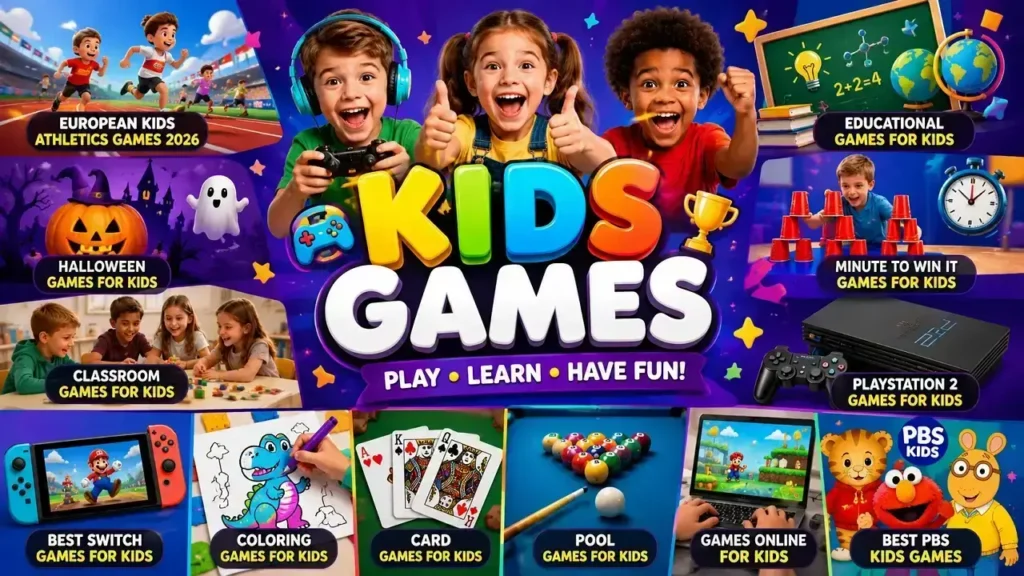
Kids games turn ordinary moments into chances to move, think, create, and connect. From classroom challenges to card games, sports, coloring, and carefully chosen video games, the right activity can make learning feel like play.
Key Highlights
- Explore 30+ kids games across sports, classroom play, learning, cards, coloring, pools, consoles, and online activities.
- Learn why active and child-led play matters for physical, social, and thinking skills.
- Find age-friendly ideas for preschoolers, school students, and families.
- Discover educational games such as Tynker, Buzzmath, PBS KIDS Games, and Prodigy.
- Compare classic PS2 games with newer Nintendo Switch games.
- Get simple Halloween, classroom, indoor, outdoor, and team-building game ideas.
- Use practical tips to balance online games with movement and family play.
- Choose games based on age, safety, skill level, group size, and the child’s interests.
What Are Kids Games and Why Do They Matter?
Games online for kids are activities made for children to enjoy while building skills through play. They can be as simple as Go Fish, Simon Says, or hide and seek, or as digital as a learning app, console game, or online puzzle. Popular browser games such as Snow Rider can also add excitement to playtime while helping children practice focus, timing, and coordination. From years of watching children learn through play, one thing becomes clear: the best game is not always the newest or most colorful one. It is the game that matches the child’s age, ability, attention span, and reason for playing.
A five-year-old may learn more from a simple matching game than from a complicated adventure designed for older players. Likewise, a group of students may become more engaged when a spelling lesson becomes a team challenge instead of another worksheet.
What Skills Can Kids Games Build?
Different games encourage different skills, so you should look beyond the label “fun.” A memory game can support recall and attention. Building games can encourage planning and spatial thinking. Team sports can teach communication and cooperation. Drawing and coloring can give children a way to explore shapes, colors, patterns, and creative choices. Even a simple card game can teach children to wait, follow rules, count, compare, and handle winning or losing.
| Game type | Skills children can practice | Good setting |
|---|---|---|
| Puzzle games | Logic, planning, attention | Home |
| Card games | Memory, counting, turn taking | Family time |
| Sports games | Coordination, teamwork, movement | Outdoors |
| Classroom games | Recall, communication, confidence | School |
| Coloring games | Creativity, visual skills | Home or classroom |
| Educational games | Academic practice, problem solving | Home or school |
| Cooperative games | Listening, teamwork, patience | Groups |
| Party games | Social skills, confidence, fun | Parties |
What Are European Kids Athletics Games 2026?
The European Kids Athletics Games 2026 are an international youth athletics meeting organized in Brno, Czech Republic. The official event information describes the 2026 competition as the 21st edition and lists boys and girls born from 2011 through 2015 in the eligible age groups. Events include sprinting, middle distance running, long jump, high jump, javelin, shot put, and hurdles.
For parents, the bigger lesson is simple: kids games do not have to happen on a screen. Running, jumping, throwing, balancing, and team challenges can be just as exciting. When you give children a playful reason to move, exercise feels less like a task and more like an adventure. That is one reason athletics based games can be useful at schools, clubs, family events, and community activity days.
European Kids Athletics Games 2026: A Fun Introduction to Kids Games


The 2026 event has a strong competitive side, but the idea behind youth athletics is easy for younger children to understand. A child can race a friend, try to jump farther, practice a new movement, or cheer for a teammate. These small experiences help children learn that improvement matters as much as winning.
The official competition follows World Athletics rules and includes eight track lanes at its stadium venue. The published age categories include U15, U14, U13, U12, and U11, with different events and equipment based on age. This age based approach is useful when you design games at home or school too. A five year old does not need the same challenge as a twelve year old.
Cibasport’s Role in the 2026 Athletics Tournament
ČIBA SPORT ATHLETIC is listed as an organizer of the European Kids Athletics Games, together with Jump Athletic Club Brno. The official event site also reports strong participation interest for the 2026 edition.
For families, organized youth sports show how structured games can build confidence. A child learns where to stand, when to start, how to listen to instructions, and how to handle both success and disappointment. Those skills transfer well to other kids games, from classroom challenges to family board games.
Kids’ Athletics Day 2026: Innovation in Ireland
A school athletics day does not need expensive equipment. You can create simple stations with cones, chalk lines, soft balls, beanbags, hoops, or safe household objects. One station can focus on running, another on balance, another on throwing, and another on teamwork.
The goal is not to create a miniature Olympic event. The goal is to give children several ways to succeed. If one child is not a fast runner, they may be great at balancing, throwing, cheering, or helping a teammate. Good kids games make room for different strengths.
A Playful Pathway to Active Kids Games
Try turning movement into a story. Instead of saying, “Run to the cone,” tell your child they are racing to rescue a toy before the imaginary volcano erupts. Instead of asking them to jump ten times, make each jump part of a frog adventure.
That small change can make activity feel exciting. You are still practicing movement, but the child sees a game rather than an exercise routine. This approach is especially useful for younger children who enjoy imagination.
Fostering Inclusion Through Teamwork and Sports
Team games teach children that everyone can contribute. You can create mixed ability teams and give each player a useful job. One child might run, another might count points, another might collect equipment, and another might encourage the group.
This matters because competition can become frustrating when the same children always win. Cooperative games change the goal from “beat everyone” to “finish the challenge together.” That creates a friendlier experience for children with different physical and learning abilities.
Supporting Teachers and Empowering Children
Teachers can use short movement games as transitions between lessons. A two minute stretch, a quick memory race, or a movement based spelling game can give children a mental reset without taking over the school day.
Children also benefit when adults let them help create rules. Ask, “How could we make this game fair?” or “What could we change to make it harder?” Giving children a voice builds ownership and makes them more interested in playing.
What Are Halloween Games for Kids?
Halloween games for kids are playful activities built around costumes, pumpkins, monsters, ghosts, treats, and other Halloween themes. The best games are easy to understand and quick to start because young children can lose interest when rules become too complicated.
Classic choices include mummy wrap races, apple bobbing, doughnut-on-a-string games, and simple monster-themed guessing games. Current Halloween party guides continue to recommend these types of activities because they require little equipment and can work for different group sizes.
Fun Halloween Party Ideas & Ghoulishly Great Halloween Games for Kids
A successful Halloween party does not need dozens of expensive decorations or complicated activities. Think about the flow of the party instead. Start with a simple welcome activity, move into active games, add food and treats, and finish with a calmer activity.
For younger children, keep games short. For older children, add scoring, teams, clues, or timed challenges to make familiar games feel fresh.
How do you throw a Halloween party for kids?
Start by choosing a simple theme and deciding where children will play. Make sure the activity area is clear of sharp objects, loose cords, slippery surfaces, and anything that could cause trips.
A useful two-hour party plan could look like this:
- Welcome and costume show
- One easy group game
- Halloween craft or decoration activity
- Active party game
- Food and treats
- Two more short games
- Final group activity and goodbyes
You do not need to keep children busy every second. Short breaks often make the next game more enjoyable.
Decorating Your Kid-Friendly Halloween Party
Make your Halloween party extra memorable with fun, kid-friendly decorations that create a spooky atmosphere without making things too scary. From a playful haunted house to creative DIY crafts, you can turn your yard and party space into a festive Halloween adventure.
- Yard Decor: Give your outdoor space a Halloween makeover with pumpkins, friendly ghosts, spider webs, colorful lights, and simple spooky signs. Keep the decorations playful and welcoming so younger kids can enjoy the Halloween theme comfortably.
- Haunted House & Classic Decorations: Create a mini haunted house with cardboard, blankets, paper bats, and safe Halloween props. Add classic decorations such as pumpkins, skeletons, witches, and friendly monsters for an exciting but age-appropriate spooky setting.
- DIY Decor: Let the kids get creative by making their own Halloween decorations from paper, cardboard, paint, and recycled materials. DIY crafts are an easy way to add a personal touch while keeping everyone involved in the party fun.
- Boo Bottles: Turn empty bottles or jars into adorable Halloween “boo bottles” using paint, stickers, ribbons, or paper faces. Place them around the party area as cute decorations or use them as fun Halloween-themed party favors.
Halloween Party Food & Treats
Make your Halloween party extra memorable with spooky snacks and creepy drinks that are as fun to look at as they are to enjoy. From colorful mad scientist drinks to playful monster mash snacks, these easy party ideas bring Halloween spirit to every bite and sip.
- Mad Scientist Drinks: Mix up bright, fizzy drinks with fun colors, bubbling effects, and spooky garnishes to create mad scientist-style Halloween beverages that kids will love.
- Monster Mash Snacks: Turn simple party foods into creepy-cute Halloween treats using monster eyes, spooky shapes, and creative decorations that make snack time more exciting.
Best Halloween Party Games for Kids

Halloween parties are even more exciting when kids have simple, active games to play together. These fun Halloween party games for kids are easy to set up, encourage friendly competition, and work well for school parties, family gatherings, or spooky celebrations at home.
- Mummy Wrap: Turn kids into silly Halloween mummies with this fun and easy party game. Players race to wrap a teammate in toilet paper while trying to create the funniest mummy before time runs out.
- Pin the Tail on the Monster: Give the classic party game a spooky Halloween twist with a friendly monster. Blindfolded players try to pin the tail in the right spot, making it a fun challenge for younger kids.
- Bobbing for Apples: Add a classic Halloween activity to your party with bobbing for apples. Kids use only their mouths to grab apples from a tub of water, creating plenty of laughter and friendly competition.
- Donuts On a String: Hang small donuts from strings and challenge kids to eat them without using their hands. This playful Halloween party game is easy to organize and guarantees plenty of laughs.
What Are Classroom Games for Kids?
Classroom games are structured activities that teachers use to add movement, practice, interaction, or review to a lesson. They can be as simple as Four Corners or as technology-based as a quiz game.
The important part is matching the game to the learning goal. A spelling game should give students chances to practice spelling, while a movement game can be used as a short reset between lessons.
The Best Classroom Games for Kids: Fun and Engaging Activities
Classroom games work best when the rules are short and the teacher can start the activity quickly. You also want games where children spend more time participating than waiting for their turn.
Why Play Games in the Classroom?
Classroom games make learning more interactive, enjoyable, and memorable for students. They can help teachers maintain attention, encourage participation, and turn challenging lessons into engaging learning experiences.
- It Prevents Burnout: Adding educational games to lessons gives students a refreshing break from repetitive learning routines. Short, purposeful game sessions can restore attention and make classroom learning feel more enjoyable.
- Meeting the Need for Fun and Belonging: Games create opportunities for students to interact, collaborate, and feel connected with their classmates. A fun classroom environment can encourage participation while helping students build confidence and a sense of belonging.
- Reinforcing Academic Concepts Through Retrieval Practice: Well-designed classroom games encourage students to recall facts, vocabulary, formulas, and key concepts in an active way. Repeated retrieval can make learning more engaging while helping students strengthen their understanding and memory.
5 Popular Classroom Games for Kids
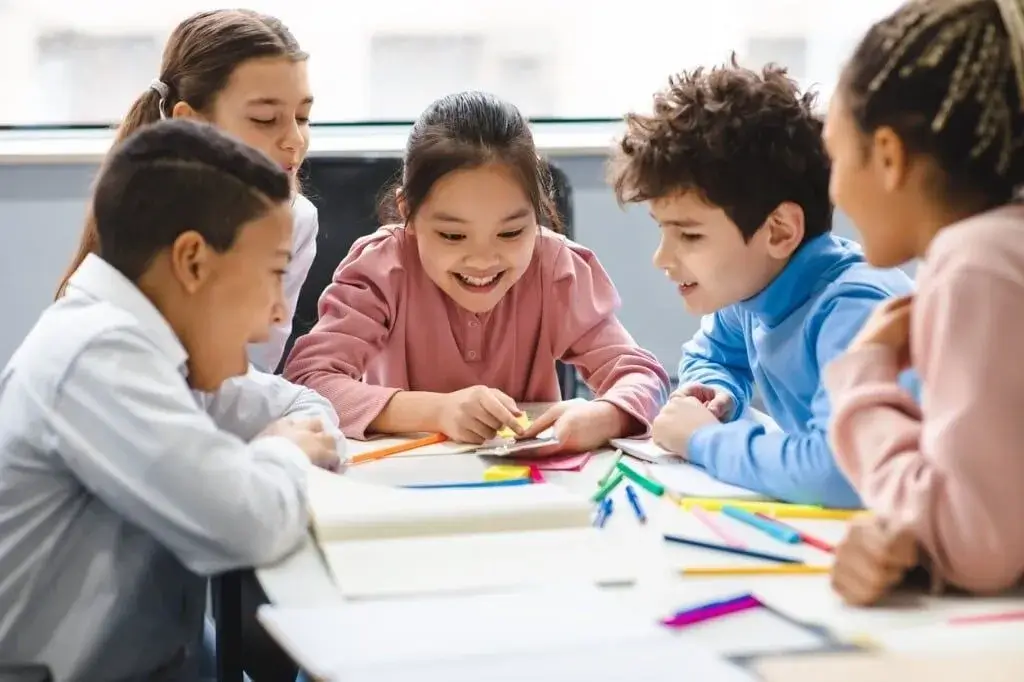
Classroom games for kids make learning more interactive while giving students a fun way to participate, practice skills, and work with classmates. These simple games are easy for teachers to organize and can be adapted for different ages, subjects, and classroom sizes.
- Kahoot! Quiz Game: A quiz format can turn review questions into a friendly competition. Use it before a test, after a lesson, or as a quick way to discover which concepts students still find difficult.
- Four Corners: Label four areas of the classroom with answers or choices. Ask a question and have students move to the corner they believe is correct.
- Silent Ball: Students pass a soft ball while staying silent. If someone talks or drops the ball, the teacher can use a simple classroom rule to decide whether they sit out or restart.
- Sparkle / Spelling Game: Students stand or sit in a circle and spell a word one letter at a time. The activity gives spelling practice while keeping students alert.
- Minute to Win It Challenges: Give students a simple challenge with a short time limit. You can use cups, pencils, paper, or other classroom-safe items.
- ClassDojo: ClassDojo is a fun classroom platform that helps teachers engage kids through activities, rewards, and positive feedback. It makes learning more interactive while encouraging good behavior, teamwork, and participation.
Fun Kids Games That Adapt to Any Grade or Subject
The best classroom games are flexible. You can change the vocabulary, questions, movement, or difficulty without teaching an entirely new game.
Top Adaptable Games for Every Subject
Adaptable classroom games can make almost any subject more interactive, from math and science to language arts and social studies. These simple activities encourage students to participate, think creatively, and learn concepts through hands-on play.
- Act it Out: Students act out a word, historical event, science concept, or story scene while classmates guess what it represents.
- Simon Says: Use Simon Says to teach body parts, directions, vocabulary, classroom routines, or language concepts.
- Flip It with Whiteboards: Give students a question and let them write answers on small whiteboards. Everyone can reveal an answer at the same time, giving the teacher quick feedback.
- Charades: Charades can work for vocabulary, books, occupations, animals, science concepts, and more. Change the word list to match the lesson.
How to Choose the Best Games for Your Students (Indoor vs. Outdoor)
Indoor games should fit the available space and avoid activities that encourage running near desks. Outdoor games can include more movement, but you still need clear boundaries and simple safety rules.
| Factor | Indoor Games | Outdoor Games |
|---|---|---|
| Space | Limited | Usually larger |
| Movement | Low to moderate | Moderate to high |
| Best for | Review, language, memory | Relays, races, teamwork |
| Equipment | Usually minimal | Cones, balls, hoops can help |
| Weather | Not a concern | Weather matters |
What Are the Benefits of Team Building Activities for Kids?
Team building games teach children how to communicate, listen, share responsibility, and solve small problems together.
The best activities do not make one child responsible for everything. Give each player a useful role so children learn that teamwork means contributing, not simply following the fastest player.
What Are Educational Games for Kids?
Educational games combine play with learning goals. They can help children practice mathematics, spelling, vocabulary, reading, logic, science, coding, or problem-solving. A good educational game should still feel like a game. If the child is only clicking through worksheets with a game-like design, the learning experience may not be as engaging as it appears.
Best Free Online and Offline Educational Games for Kids
You can find educational games for almost every age and subject. The key is to check whether the activity matches the child’s ability and whether the learning goal is clear.
Offline games are especially useful when you want to reduce screen use. Flash cards, puzzles, memory games, word games, building challenges, and counting activities can all provide useful practice.
Interactive Learning Games for Preschoolers (5-Year-Olds)
Five-year-olds often benefit from short activities with clear visual feedback. Matching games, counting games, simple puzzles, phonics activities, coloring, and memory challenges can all work well. Keep the activity short enough that the child can finish successfully. A small win often creates more motivation than a long activity that becomes frustrating.
Top Online Educational Games for School Students
School-age children can use online games for math, reading, spelling, coding, science, and logic. Choose platforms that clearly explain what children are learning and avoid unnecessary distractions.
Parents should also check privacy settings, advertising, chat functions, and age guidance before allowing regular use.
Best Offline Educational Games for Kids (Free Download)
Offline options are useful for travel, classrooms, waiting rooms, or screen-free afternoons. Printable puzzles, matching cards, word searches, number challenges, and memory games can be downloaded or made at home.
Best Educational Games for Kids

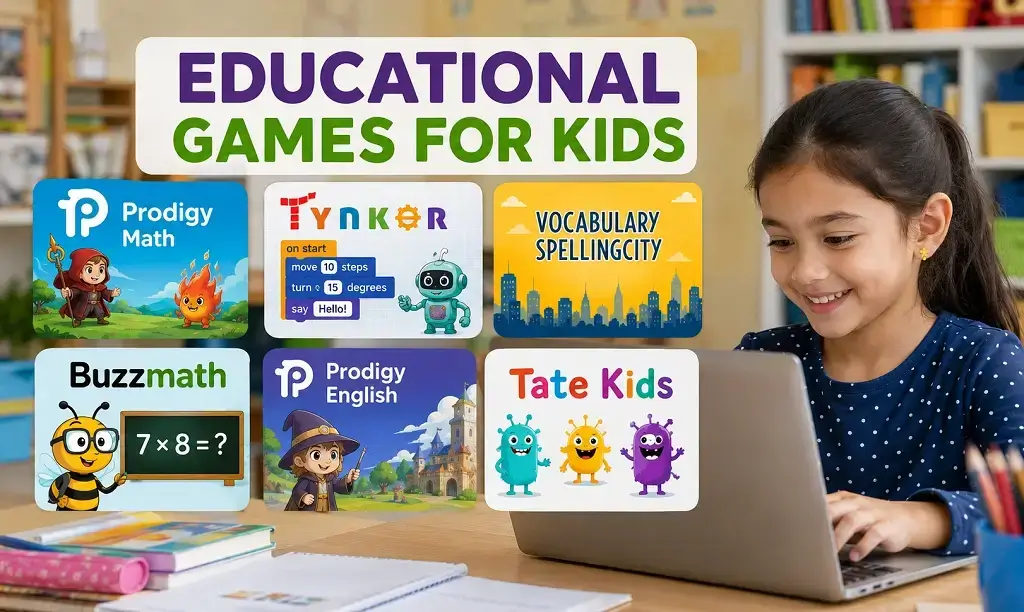
Educational games make learning more engaging by turning lessons into fun, interactive activities. The following games help kids build skills in math, coding, vocabulary, English, and art while learning at their own pace.
- Prodigy Math: Prodigy Math uses game-style challenges to give students math practice. It can be useful when a child enjoys fantasy-style game environments and needs extra practice.
- Tynker: Tynker focuses on coding and digital creation. It can introduce children to programming concepts through guided activities.
- Vocabulary Spelling City: Vocabulary and spelling activities can turn word practice into short games. It can be useful for children who need repeated exposure to new words.
- Buzzmath: Buzzmath focuses on mathematics and problem-solving. Its activities can be useful for students who prefer interactive practice.
- Prodigy English: Prodigy English provides game-based language practice. Children can work through activities while progressing through a game-style environment.
- Tate Kids: Tate Kids introduces children to art through activities and creative content. It can be a good choice when you want an educational activity that is not centered on traditional school subjects.
- Block Blast: Block Blast is a fun puzzle game where kids place colorful blocks on a grid to complete rows and clear them.
It helps build logical thinking, pattern recognition, and problem-solving skills while keeping gameplay simple and engaging.
Online Games for Kids That Make Learning Fun
Online games can make learning feel more interactive because children can receive immediate feedback. However, the quality of the learning experience depends on the game design.
Before choosing a game, ask three questions: What does my child learn? Is the content suitable for their age? Does the game encourage useful thinking rather than endless clicking?
What Are PlayStation 2 Games for Kids?
PlayStation 2 games for kids are games released for Sony’s classic PlayStation 2 console. Many older family-friendly titles focused on simple controls, recognizable characters, racing, puzzles, or movement-based play.
Because the PlayStation 2 is an older console, parents should check the condition of used discs and controllers before buying. It is also important to check age ratings and whether the game suits the child.
The Best playstation 2 games for kids
Classic PS2 games can be interesting for families because they offer a different style of gaming from modern online titles. Many do not depend on constant internet access, live services, or large online communities.
Top Fun & Interactive Playstation 2 Games for Kids

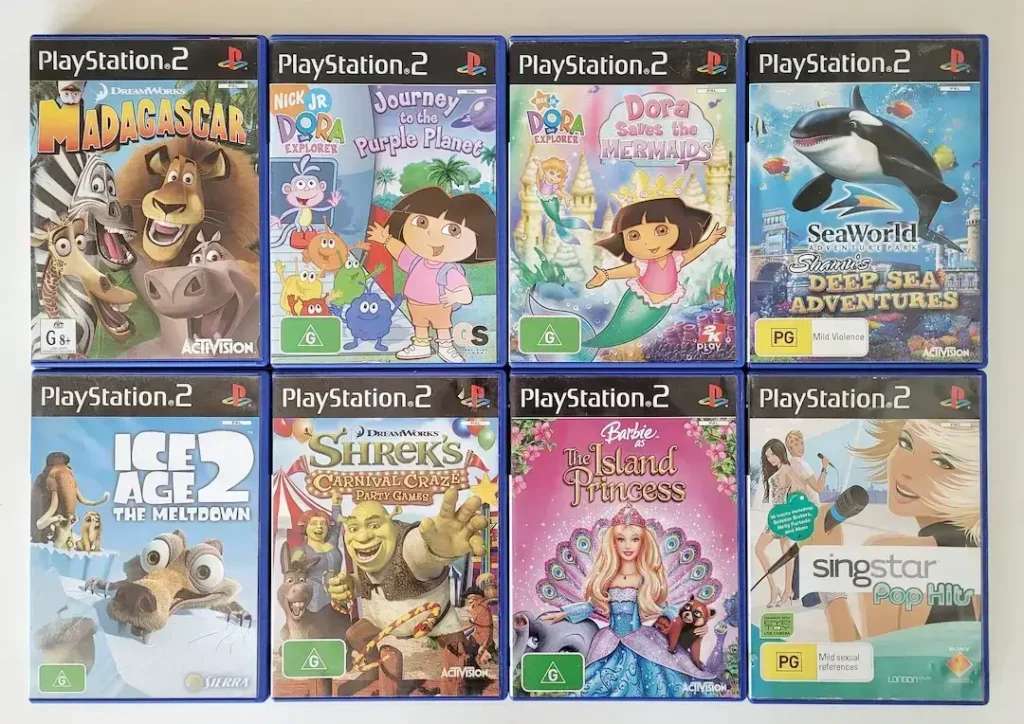
PS2 kids games can turn simple playtime into a fun and interactive experience. These games offer easy controls, colorful gameplay, and kid-friendly challenges that make them enjoyable for younger players.
- Curious George: Curious George offers a child-friendly adventure based around the familiar character. Its simple concept can appeal to younger players who enjoy exploration and story-driven play.
- Eggo Mania: Eggo Mania is a colorful arcade-style game with simple gameplay ideas. It can work well for players looking for a light, unusual family game.
- Preowned: Preowned PS2 games can be an affordable way to explore older titles. Always check the disc condition, controller compatibility, and seller information before buying.
- EyeToy: Play Platinum: EyeToy: Play uses camera-based interaction and gives players movement-focused mini-games. It is a useful example of how older consoles experimented with active play.
Why Classic PS2 Video Games are Great for Children
Classic games can be easier to understand because many focus on a small set of mechanics. They can also introduce children to the history of console gaming. For parents, the biggest advantage may be the opportunity to play together. A simple two-player game can become family time instead of isolated screen time.
What Are Nintendo Switch Games for Kids?
Nintendo Switch games for kids include family-friendly adventures, racing games, creative games, puzzle titles, sports games, and multiplayer experiences.
The Switch family of systems is designed around flexible play, including handheld and TV-based use on compatible models. Parents should still check each game’s age rating, online features, communication options, and content.
Best Nintendo Switch Games for Kids: The Ultimate Parent’s Guide
The right Nintendo Switch game depends on the child’s age and interests. Younger children may prefer simple controls and colorful worlds, while older children may enjoy exploration, building, racing, or strategy.
Nintendo launched Nintendo Switch 2 on June 5, 2025, so families considering a new console in 2026 have both the original Switch ecosystem and the newer Switch 2 platform to consider.
Best Nintendo Switch Games for Kids That Are Actually Good

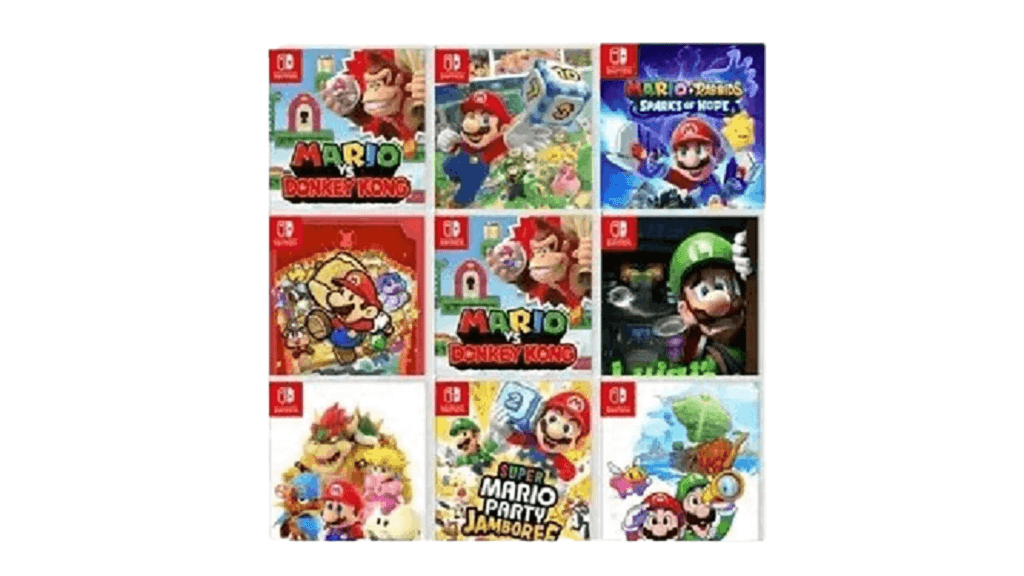
Looking for Nintendo Switch games that kids will enjoy without feeling repetitive or overly complicated? These picks offer fun gameplay, age-friendly challenges, and plenty of opportunities for creativity, exploration, and family play.
- Mario Kart 8 Deluxe: Mario Kart 8 Deluxe is an accessible racing game with familiar Nintendo characters. Simple controls and multiplayer options make it a strong family choice.
- Kirby and the Forgotten Land: Kirby and the Forgotten Land combines exploration, platforming, and colorful environments. Its playful design can appeal to children who enjoy adventure without wanting an overly complex game.
- Animal Crossing: New Horizons: Animal Crossing: New Horizons focuses on decorating, collecting, exploring, and creating a personal island. It moves at a slower pace than action-heavy games.
- Minecraft: Minecraft gives children a large sandbox where they can build, explore, and create. Parents should review multiplayer and online settings before allowing online play.
- Super Mario Odyssey: Super Mario Odyssey combines platforming, exploration, puzzles, and creative movement. It can appeal to children who enjoy discovering hidden areas and solving small challenges.
Best Nintendo Switch Games to Play With Kids: Co-Op and Family Multiplayer
Family multiplayer games can change gaming from an individual activity into something you do together. Racing, cooperative adventure, sports, and party games are especially useful for shared play.
Before starting, decide whether everyone is comfortable with the controls. Younger players may need simplified controls or a little help from an older player.
Best Educational Nintendo Switch Games for Fun & Learning
Educational Switch games can cover mathematics, puzzles, language, creativity, music, geography, and problem-solving. Look beyond the word “educational” and check the actual gameplay. A game is more useful when the child is actively thinking, making choices, solving problems, or creating something rather than simply watching content.
Digital vs. Physical Switch Games: Which Is Better for Kids?
| Feature | Digital Games | Physical Games |
|---|---|---|
| Convenience | Easy to download | Need a cartridge |
| Sharing | Tied to account/system rules | Cartridge can be moved |
| Storage | Uses digital storage | Less download storage needed |
| Resale | Usually not resold | Can often be resold |
| Setup | No cartridge swapping | Easy to see and organize |
Do You Need to Wait for the Nintendo Switch 2?
No. Nintendo Switch 2 launched in 2025, so in 2026 it is already an available platform rather than an upcoming system. Nintendo describes it as a new platform with updated hardware, new features, and games designed for the system.
If you already own a Switch, compare the games you want, hardware features, compatibility, and total cost before upgrading.
What Are Coloring Games for Kids?
Coloring games are digital or printable activities that let children fill pictures with colors, patterns, and creative designs. They can be used as quiet-time activities at home, in classrooms, or during travel.
Digital coloring can be convenient, while paper coloring gives children a hands-on activity away from screens.
The Best Coloring Games for Kids

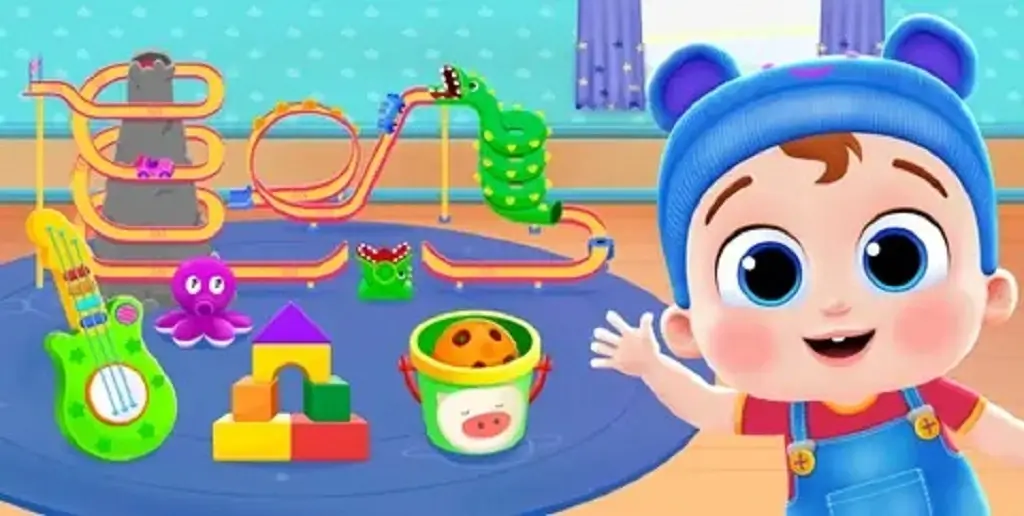
Coloring games for kids make creative play more fun while helping children explore colors, shapes, and different themes. These online coloring games are easy to play and offer a simple way for kids to enjoy screen time while expressing their creativity.
- Coloring Pad: Coloring Pad lets kids choose colors and fill in fun pictures with simple controls. It is a creative online coloring game for children who enjoy drawing and experimenting with different colors.
- Animals Coloring Online: Animals Coloring Online lets kids color pictures of their favorite animals using a variety of bright colors. It offers a fun and easy way to learn about animals while enjoying creative play.
- Dinosaurs Coloring Online: Dinosaurs Coloring Online brings prehistoric creatures to life through fun and colorful pictures. Kids can choose their favorite dinosaur and use different colors to create their own unique artwork.
- Princesses Coloring Online: Princesses Coloring Online gives kids a chance to color beautiful princess-themed pictures with their favorite shades. It is a fun choice for children who enjoy fairy tales, characters, and creative coloring activities.
- Vehicles Coloring Online: Vehicles Coloring Online lets kids color cars, trucks, buses, and other exciting vehicles. With easy-to-use controls, children can create colorful vehicle pictures while enjoying an interactive coloring experience.
Safe and Fun Online Coloring Games for Kids
Look for websites with simple navigation, age-appropriate content, limited advertising, and no unnecessary chat functions. If the child is young, stay nearby and teach them not to click unfamiliar links or share personal information.
Why Coloring Matters for Child Development
Coloring gives children a chance to practice hand control while making creative choices. It can also support attention and visual decision-making. Do not worry about keeping every picture inside the lines. Creative freedom is part of the activity.
What Are Card Games for Kids?
Card games for kids are tabletop games that use playing cards or specialized game cards. They can be easy to learn, inexpensive, portable, and useful for family time. Card games can support counting, matching, memory, planning, turn-taking, and communication. The best choice depends on the child’s age and ability to follow rules.
5 Best Card Games for Kids
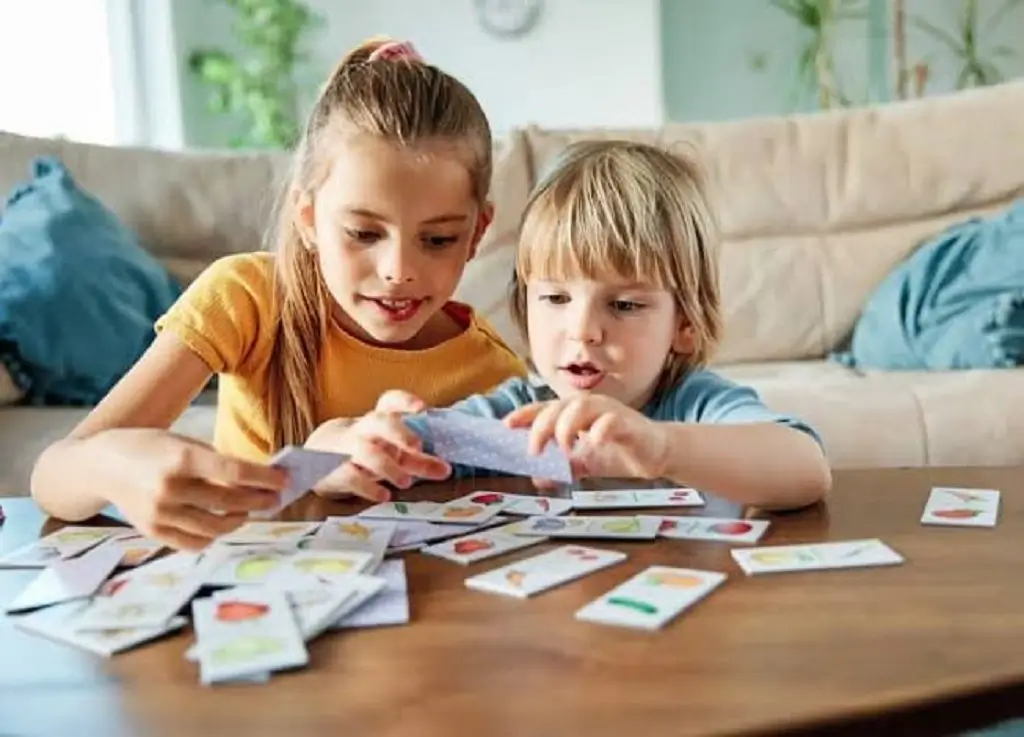

Card games for kids are a simple way to make family time more fun while helping children build memory, focus, counting, and strategic thinking skills. These easy-to-learn games work well for playdates, classrooms, and family game nights.
Sleeping Queens
Sleeping Queens is a fun card game where players wake up sleeping queens by using different cards and strategies. Its colorful theme and simple rules make it an engaging choice for younger children.
- Recommended Age: Best for children ages 8 and up.
- Number of Players: The game can be played by 2 to 5 players.
- How to Play: Players use their cards to wake queens, collect them, and protect them from opponents. The goal is to collect enough points through clever card choices before another player reaches the winning score.
Rat-a-Tat Cat
Rat-a-Tat Cat is a quick card game that combines memory and simple strategy. Kids try to remember the cards in front of them while looking for ways to finish with the lowest score.
- Recommended Age: Best for children ages 6 and up.
- Number of Players: The game supports 2 to 6 players.
- How to Play: Each player receives cards and tries to remember their values. Players draw and replace cards during their turn, aiming to keep low-value cards while using memory to make better decisions.
Go Fish!
Go Fish! is one of the easiest classic card games for kids to learn. It helps children practice matching, memory, communication, and taking turns while keeping gameplay simple and fun.
- Recommended Age: Best for children ages 4 and up.
- Number of Players: It can be played with 2 to 6 players.
- How to Play: Players ask another player for cards of a specific rank. If that player does not have the requested cards, they say “Go Fish!” and the asking player draws from the deck. Players collect matching sets, and the player with the most sets wins.
Crazy Eights
Crazy Eights is a fast-paced card game that teaches kids to recognize patterns and think about their next move. The rules are easy to learn, making it a popular choice for family game nights.
- Recommended Age: Best for children ages 5 and up.
- Number of Players: It can be played by 2 or more players, depending on the deck and house rules.
- How to Play: Players take turns matching the top card by suit or rank. Eights are special cards that can usually be played at any time and allow the player to choose a new suit. The first player to get rid of all their cards wins.
Concentration / Memory
Concentration, also called Memory, is a simple matching game that helps children improve their memory and attention. It requires very little setup and can be played almost anywhere.
- Recommended Age: Best for children ages 3 and up.
- Number of Players: The game works well with 2 or more players.
- How to Play: Place the cards face down and mix them. Players take turns turning over two cards at a time, trying to find matching pairs. If the cards match, the player keeps the pair; otherwise, they turn the cards face down again. The player with the most pairs wins.
Easy card games with a deck of cards
A standard deck can provide many simple games. Go Fish, War, Crazy Eights, Memory, and simple matching games are good starting points.
For younger children, remove complicated rules. The goal is to help them understand turns and matching before adding strategy.
Card games for kids 2 players
Two-player games are useful for parent-child game time. War, Go Fish, Memory, and simple versions of Crazy Eights can all work with two players.
Card games for kids online
Digital card games can teach matching, memory, and basic strategy. Parents should check advertising, privacy, chat features, and age suitability before choosing an online version.
Exciting Indoor Games for Kids to Play at Home
Indoor games do not have to involve a screen. Try scavenger hunts, charades, building challenges, Simon Says, balloon games, puzzles, memory games, and simple card games. Keep a small box of reusable game supplies such as paper, cards, soft balls, cups, and crayons. It makes spontaneous play much easier.
What Are Pool Games for Kids?
Pool games for kids include swimming games, water challenges, races, diving activities, and pool-themed digital games. The physical games are different from online pool games, but both can be entertaining.
Water safety should always come first. Children who are not strong swimmers should have close adult supervision and should follow the rules of the pool.
Best Pool Games for Kids: Swimming Pool and Online Fun
Pool games can make swimming sessions more active and social. Keep the rules simple and choose activities that match each child’s swimming ability.
Best Swimming Pool Games for Kids in 2026
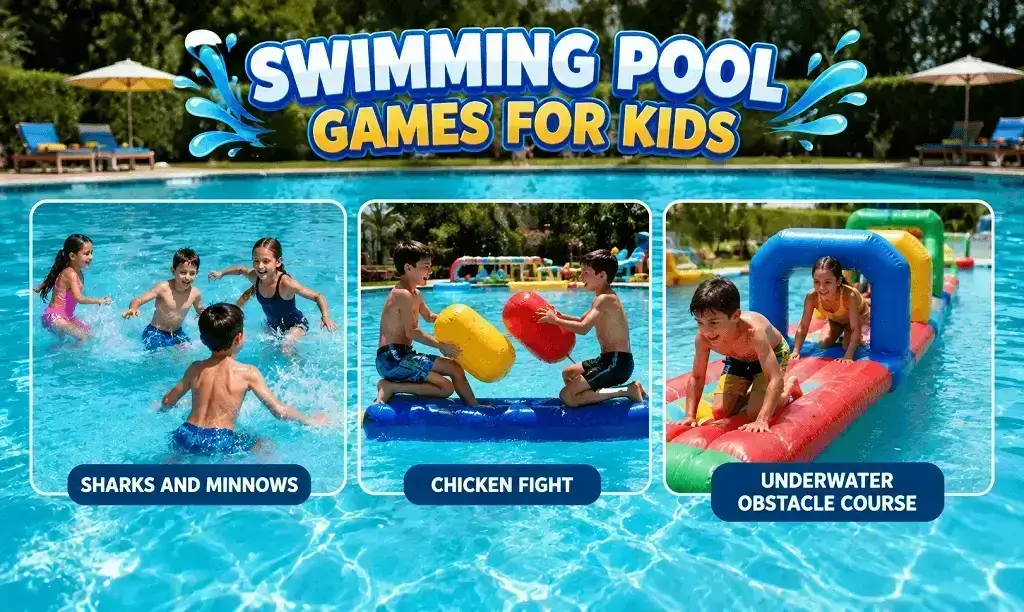
Swimming pool games make summer days more active, social, and fun for kids. These simple games can help children enjoy the water while practicing movement, teamwork, and basic swimming skills.
- Sharks and Minnows: One player becomes the shark while the other players try to move across the pool without being tagged. Adjust the game for the swimming ability of the group.
- Chicken Fight: Chicken Fight is a traditional pool game, but it can involve falls and collisions. Only use it where the pool rules allow it and where children are strong enough swimmers.
- Underwater Obstacle Course: Create a safe underwater route using pool-approved objects. Children can swim around or through the course while practicing controlled movement.
Never use an underwater game to pressure a child to hold their breath for too long.
Most Popular Online Pool Games for Kids (Virtual Billiards)


Online pool games provide a digital version of billiards without needing a physical table.
- 8 Ball Pool: 8 Ball Pool is based on the familiar eight-ball billiards format. Players aim to sink their assigned balls and finish with the eight ball.
- 8 Ball Billiards Classic: This style of online pool game focuses on straightforward billiards gameplay and can be useful for players learning basic aiming.
- 9 Ball Pool Online Multiplayer: Nine-ball uses a different target-ball system and usually requires players to hit the lowest-numbered ball first.
- Pool Club: Pool Club-style games often provide casual digital billiards with simple controls and quick matches.
- Blast Billiards 4: Blast Billiards 4 adds arcade-style elements to traditional pool gameplay, giving players a faster and more challenge-focused experience.
What are PBS KIDS Games?
PBS KIDS Games are digital games and activities connected with PBS KIDS educational content. They cover subjects and skills through familiar characters and interactive experiences.
Parents can use them as one option in a larger mix of play, reading, creative activities, outdoor movement, and family time.
5 Best Fun PBS KIDS Games to Play in 2026
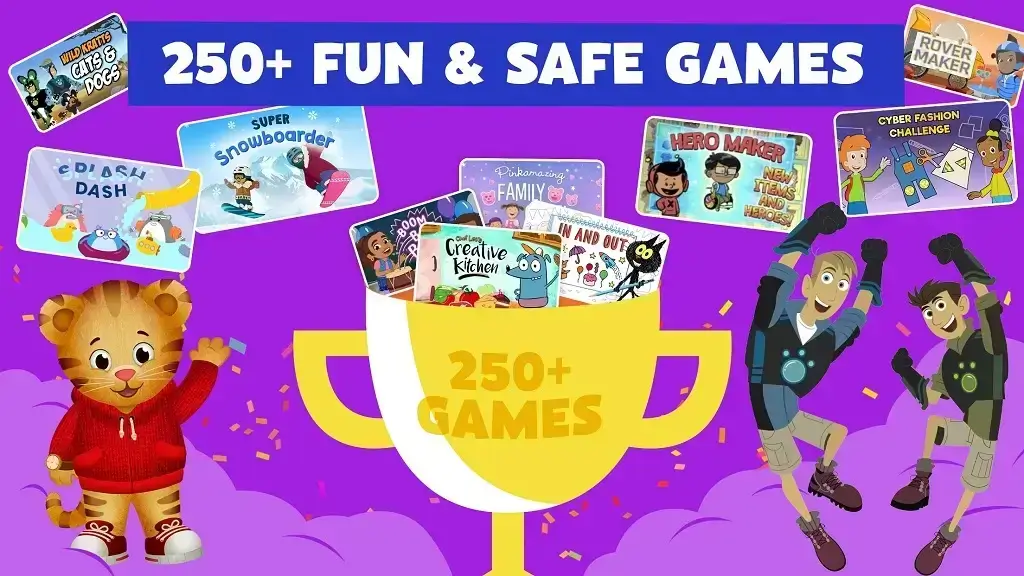
PBS KIDS offers fun, educational games that help children learn while they play. These games cover topics such as math, reading, creativity, problem-solving, and everyday skills in a simple, kid-friendly way.
PBS KIDS Games
PBS KIDS Games brings together a wide range of fun learning games featuring popular PBS KIDS characters. Kids can practice math, reading, science, and problem-solving through interactive activities.
Daniel Tiger’s Neighborhood
Daniel Tiger’s Neighborhood games help young children learn about emotions, friendship, routines, and social skills. The familiar characters make each activity fun and easy for kids to follow.
PBS Parents Play and Learn
PBS Parents Play and Learn offers simple games and activities designed to support early learning at home. Parents can use these interactive activities to help children practice math, literacy, and everyday skills.
PBS KIDS Video
PBS KIDS Video lets children enjoy educational shows and interactive content featuring their favorite characters. It is a fun way to combine entertainment with age-appropriate learning.
PBS KIDS ScratchJr
PBS KIDS ScratchJr introduces young children to coding through creative, hands-on activities. Kids can create simple stories and animations while building early programming and problem-solving skills.
Why PBS KIDS Games Are Popular With Families
Parents often look for children’s content that feels useful as well as entertaining. PBS KIDS has built its children’s media around educational goals, familiar characters, and age-focused content.
The best way to use any digital game is as part of a balanced routine. A child can enjoy a short digital activity and then move on to drawing, reading, building, outdoor play, or family interaction.
Are PBS KIDS Games Safe and Educational for Children?
PBS KIDS games are designed for children, but parents should still choose activities based on age and individual needs. Online safety is not only about the website itself. It also includes device settings, account security, downloads, advertising, and what other websites children can access.
For younger children, playing together can make digital activities more useful. Ask questions about the game and connect what the child sees on screen with real-world learning.
Conclusion
The best kids games are not always the newest or most expensive. A simple card game, classroom challenge, outdoor relay, coloring activity, or family video game can create meaningful play when it matches the child’s age and interests.
Use games as tools for movement, creativity, learning, social connection, and family time. Mix digital and offline activities, give children chances to choose, and keep safety and age suitability in mind. Whether you are planning a classroom activity, Halloween party, weekend game session, or family gaming night, the right game is the one children can understand, enjoy, and play safely.
FAQs
How do I choose age-appropriate games?
Choose games based on your child’s age, skills, interests, and attention span. Check age ratings, rules, online chat, ads, and purchase features before letting them play.
Are online educational games safe?
Many educational games are made for children, but parents should still check privacy settings, ads, links, purchases, and chat features. Playing the game first can help you judge its content and learning value.
How can I balance screen time with regular play?
Balance gaming with sleep, schoolwork, exercise, outdoor play, family time, reading, and creative activities. Set clear stopping points, such as finishing a level or round, to keep playtime manageable.
What skills do games for 5-year-olds teach?
Games for five-year-olds can build memory, counting, matching, language, fine motor skills, teamwork, problem-solving, and coordination. Different games support different skills, from card matching to active obstacle courses.
How long should a 5-year-old play games each day?
There is no single daily limit that works for every child or every type of game. Keep sessions short and make sure gaming does not replace sleep, physical activity, learning, family time, or other daily activities.